S-Tier Regulatory Pressure: What Actually Changed in 2025
Okay, so here’s the deal. Japan’s Consumer Affairs Agency didn’t just nudge the gacha industry in mid-2025 — they fundamentally rewrote the rulebook and made it IMPOSSIBLE to ignore. The updated guidelines require every single banner tier to display explicit probabilities. Not the vague “rates may vary” nonsense. I’m talking full transparency on sub-rarity breakdowns, guaranteed. And this isn’t a suggestion. This is law across every storefront operating in Japan.
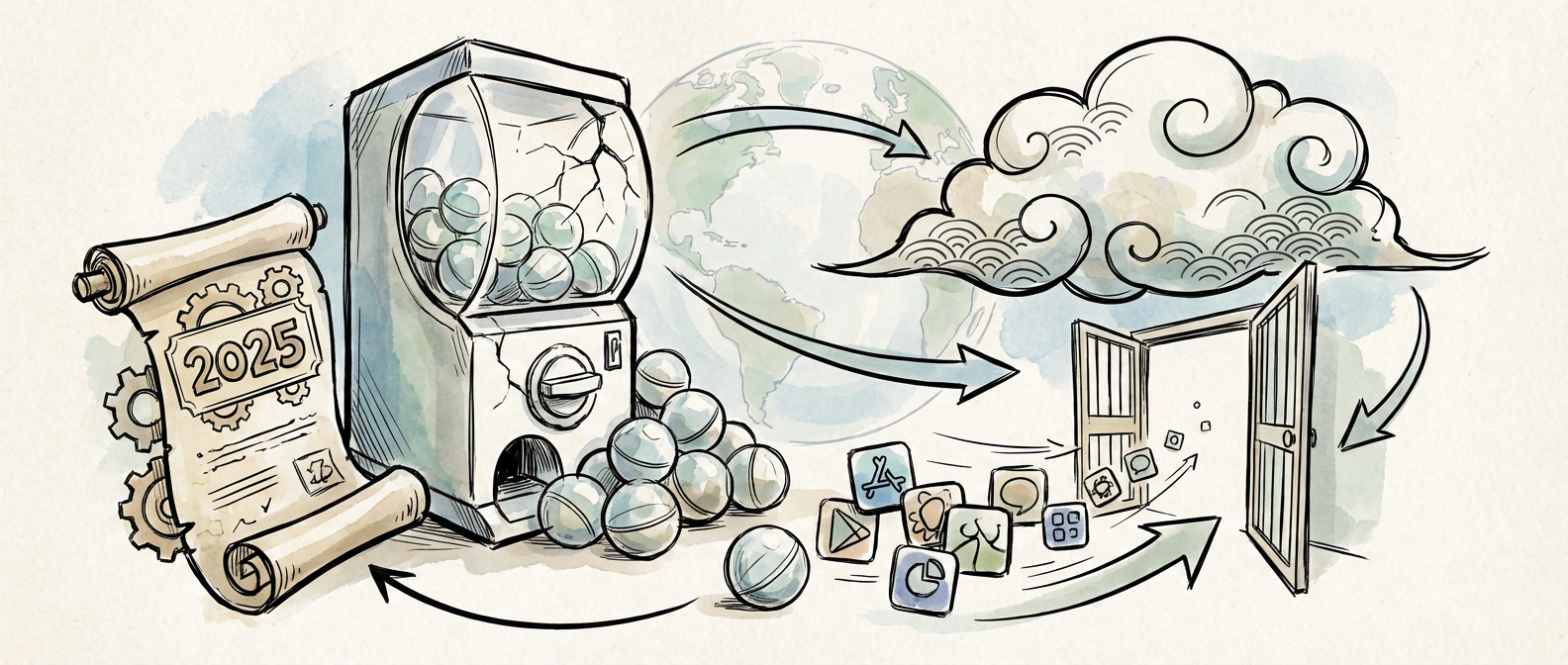
This matters because Japan isn’t some niche market you can brush off. We’re talking roughly 28% of the top 10 gacha games’ collective revenue. That’s approximately $2.4 billion of the $8.7 billion generated in 2024 alone according to Sensor Tower Mobile Gaming Revenue Report data. When Japan makes a move, the entire industry feels it. Publishers can’t just make a Japan-specific build and call it a day. The optics alone would destroy them globally.
The Compliance Ladder: A-Tier to D-Tier Publisher Responses
So how are studios actually handling this? Let me break down the tier list because not everyone’s response is equally competent.
A-Tier response: Full global transparency adoption. HoYoverse took this seriously. When Honkai: Star Rail pushed Version 3.0 in early 2026, they didn’t just comply in Japan. They rolled out a guarantee tracker UI update showing players their exact pull distance from both soft and hard pity thresholds worldwide. That’s not regulatory compliance — that’s transparency becoming a feature. Honkai Star Rail official patch notes highlighted this as a quality-of-life improvement, not a legal requirement. That’s the move. That’s how you own the narrative.
B-Tier response: Compliant but compartmentalized. Some publishers implemented the required disclosures for Japan while keeping other regions vague. This works temporarily. It doesn’t generate good press. Players notice the inconsistency. Trust tanks. Not ideal, but functional for studios that prioritize short-term revenue over long-term reputation.
C-Tier response: Minimal compliance with aggressive monetization shifts. A handful of studios added the probability displays but immediately introduced new monetization mechanics to offset lost revenue. Battle pass reworking. Limited-time currency bundles. Essentially cutting off one revenue stream and opening three others. It’s legal. It’s also transparent as mud.
D-Tier response: Denial followed by fines. South Korea’s Game Rating and Administration Committee issued approximately $2.3 million in combined fines to three mobile publishers in Q3 2025 for undisclosed rate manipulation on limited banners. These weren’t tiny studios. These were legitimate publishers who thought they could obfuscate their algorithms. They couldn’t. Don’t be this tier.
The 100-Million Player Visibility Factor
Let’s talk about the elephant in the room. Genshin Impact’s global player base exceeded 100 million registered accounts as of mid-2025 according to HoYoverse’s anniversary report. That’s not just a number. That’s visibility. When a game that massive makes a compliance decision, EVERYONE watches. Reddit threads explode. Content creators dissect every change. The community becomes a pressure amplifier.
This is why HoYoverse’s approach to transparency matters so much. They had the option to do minimum compliance. Instead, they leaned into it. The guarantee tracker became a selling point. New players felt educated. Returning players felt respected. Competitive players could calculate expected spending precisely. That’s not just good PR — that’s converting a regulatory burden into player satisfaction. Other studios are watching this playbook intensely because it works.
The visibility factor also means you can’t out-secrecy this anymore. If your game is pulling significant revenue, especially from Japan, players will eventually datamine your algorithms, reverse-engineer your rates, or compare your disclosed probabilities to actual outcomes. Hiding doesn’t work at scale. Transparency does.
The Revenue Reality Check
Here’s what’s ACTUALLY interesting though. Everyone predicted gacha games would collapse under these regulations. Revenue would tank. Studios would pivot away from gacha mechanics entirely. Doomsday scenarios across every gaming forum. And then… nothing catastrophic happened. Top-tier studios adapted. Some actually grew.
Why? Because the gacha industry had a transparency problem, not a business model problem. Players knew the odds were opaque. That frustration existed regardless. What changed is NOW players can make informed decisions. Some quit because they can finally see the math clearly. Others actually spend MORE because the uncertainty is gone and they can budget properly. It’s genuinely weird how many people said “I’ll pay if I know what I’m paying for” once the information existed.
The real impact? Publisher consolidation. Studios without massive revenue streams can’t afford compliance infrastructure costs. Studios with moderate success find their margins tightening. Studios at the top tier? They’re actually gaining market share because infrastructure costs become negligible at their scale. This regulation created a higher barrier to entry. That’s worth understanding before you assume the industry is “dying.”
What This Means for Players Going Forward
So where does this leave you? If you’re playing gacha games in 2026 and beyond, you’re in the most transparent era of the genre’s existence. That’s genuinely good. You can read exact probabilities. You can plan spending. You can make informed choices about whether a banner is worth your money based on actual mathematics instead of hope.
The trade-off is that studios will definitely innovate new monetization paths. Some will be predatory. Some will be clever and fair. Your job is the same as always: know what you’re spending, know what you’re getting, and decide if that trade is worth it. The regulation didn’t eliminate those decisions. It just gave you the information you needed to make them properly.
What’s your take on these transparency changes? Have you noticed differences in your favorite games? Drop a comment and let’s break down which publishers are actually nailing this transition and which ones are fumbling it.